
How NGOs Are Transforming Lives Through Education and Skill Development in India
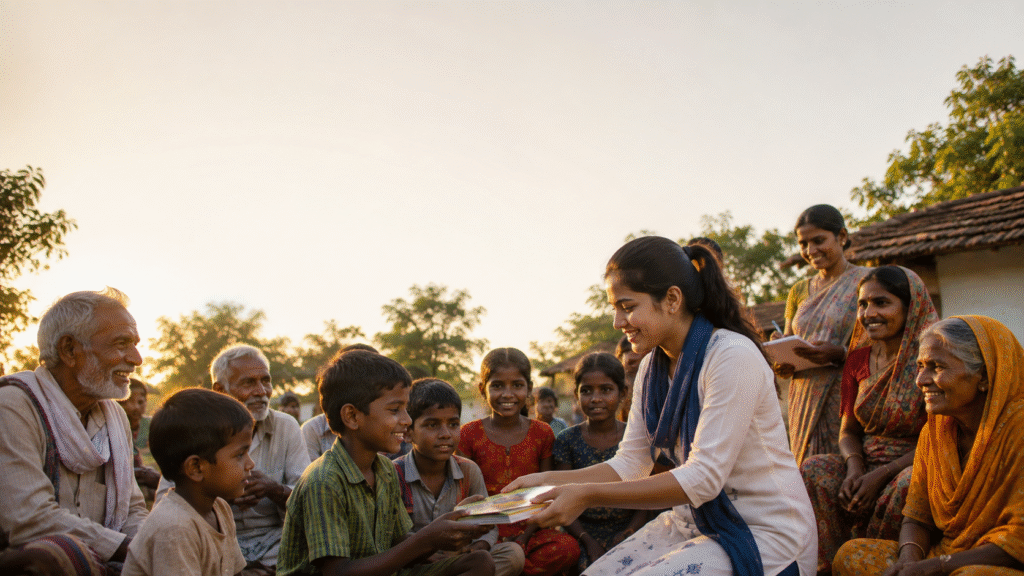
India is home to one of the largest youth populations in the world, and with that scale comes both extraordinary opportunity and extraordinary responsibility. While government schemes and public schooling systems form the backbone of the country’s education infrastructure, millions of children and adults still fall through the cracks — kept out of classrooms by poverty, geography, gender bias, or lack of access to digital tools. This is where NGOs working in education and skill development step in, quietly but powerfully reshaping futures one learner at a time.
Across cities and villages alike, charitable trusts and non-profit organizations have built an ecosystem of free education, vocational training, digital literacy, and women’s skill development programs that are closing gaps the formal system has struggled to reach. This blog explores how these NGOs are transforming lives in India, the models they use, the challenges they face, and why their work matters more than ever in 2026
The Education Gap NGOs Are Filling
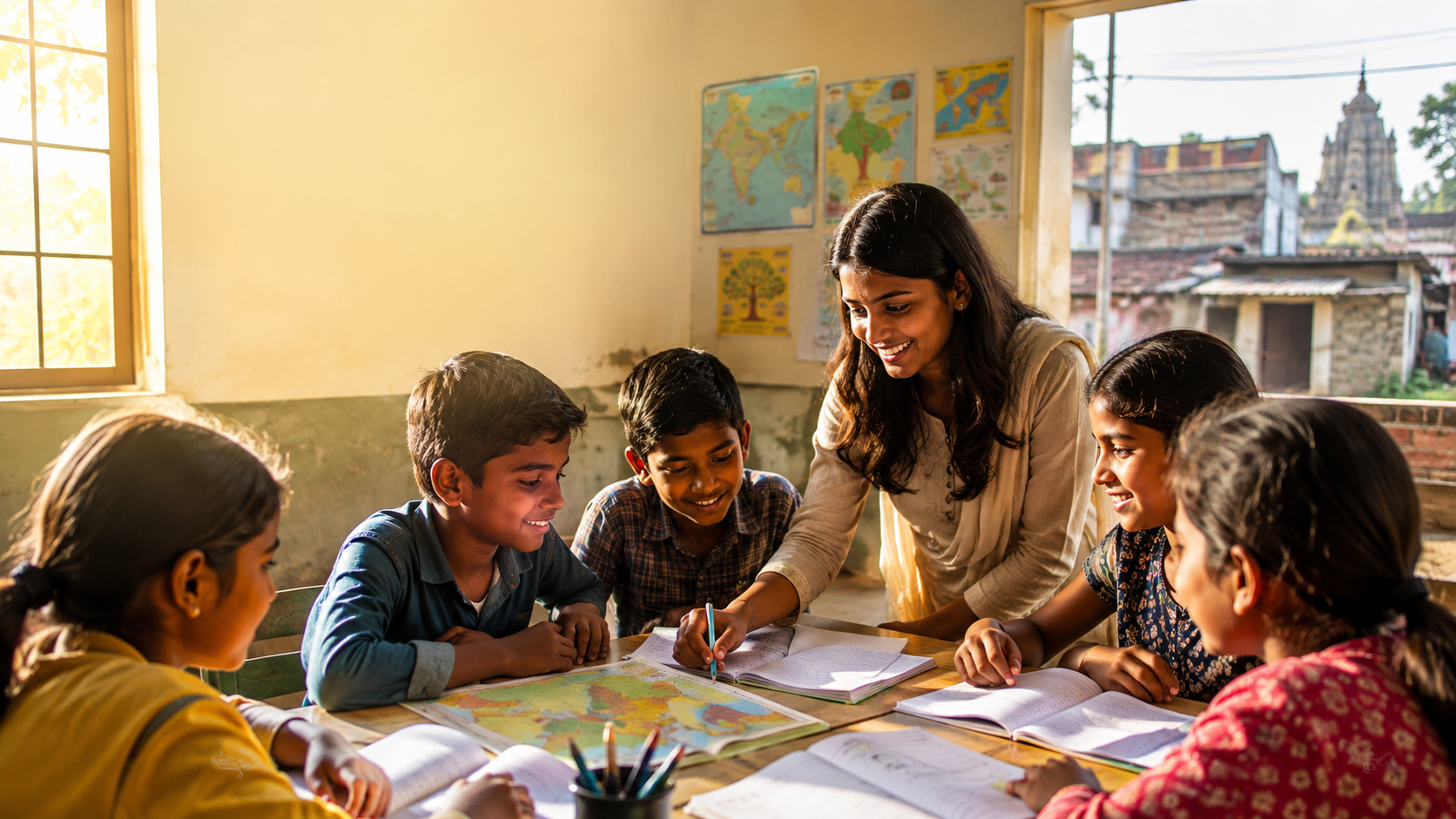
Despite decades of policy reform, India’s education system still leaves significant gaps. Government data and independent surveys have repeatedly shown that learning outcomes in many government schools lag behind expectations, dropout rates spike after primary school (especially among girls), and access to quality education remains deeply unequal between urban and rural India.
NGOs step into this gap in several distinct ways:
- Bridging out-of-school children back into the system by running informal “bridge schools” that prepare children for age-appropriate enrollment in formal schools.
- Supplementing weak classroom instruction with after-school tutoring, remedial learning centers, and teacher training programs.
- Reaching children in remote or underserved areas where government infrastructure is thin — tribal belts, urban slums, and migrant labor colonies.
- Supporting children with disabilities through inclusive education models that mainstream schools often aren’t equipped to provide.
What makes NGO-led education models effective isn’t just that they’re free — it’s that they’re often designed with deep community understanding, flexible enough to adapt to local needs, and delivered by people who are personally invested in outcomes rather than following a one-size-fits-all curriculum.
Free Education: More Than Just Access
When we talk about “free education” provided by NGOs, it’s easy to picture just a classroom with no fees. But the reality is far more layered. Charitable trusts running education programs typically provide:
1. Free tuition and learning materials — Many families, especially daily-wage earners, simply cannot afford textbooks, uniforms, or transport, let alone tuition fees. NGOs remove this barrier entirely, ensuring cost is never the reason a child stays home.
2. Nutritional support — Hunger is one of the biggest silent disruptors of learning. Several education-focused NGOs pair their programs with mid-day meals or nutritional supplements, recognizing that a child cannot concentrate on multiplication tables on an empty stomach.
3. Safe learning spaces — For children living in slums or conflict-affected regions, NGO-run centers often double as safe havens — spaces free from child labor, abuse, or exploitation, where kids can simply be kids and learn without fear.
4. Mentorship and counseling — Many organizations go beyond academics to offer emotional and psychological support, especially for children who are first-generation learners or dealing with family trauma.
5. Bridging language and curriculum gaps — For migrant children who move between states, or first-generation learners whose parents are not literate, NGOs often provide customized, multilingual learning material that formal schools rarely offer.
This holistic model of free education isn’t just about handing over a slate and a pencil — it’s about removing every possible barrier standing between a child and their right to learn.
Vocational Training: Turning Potential Into Livelihood
Education alone doesn’t guarantee economic mobility — especially for older teens and adults who need to start earning quickly. This is where vocational training programs run by NGOs play a transformative role.
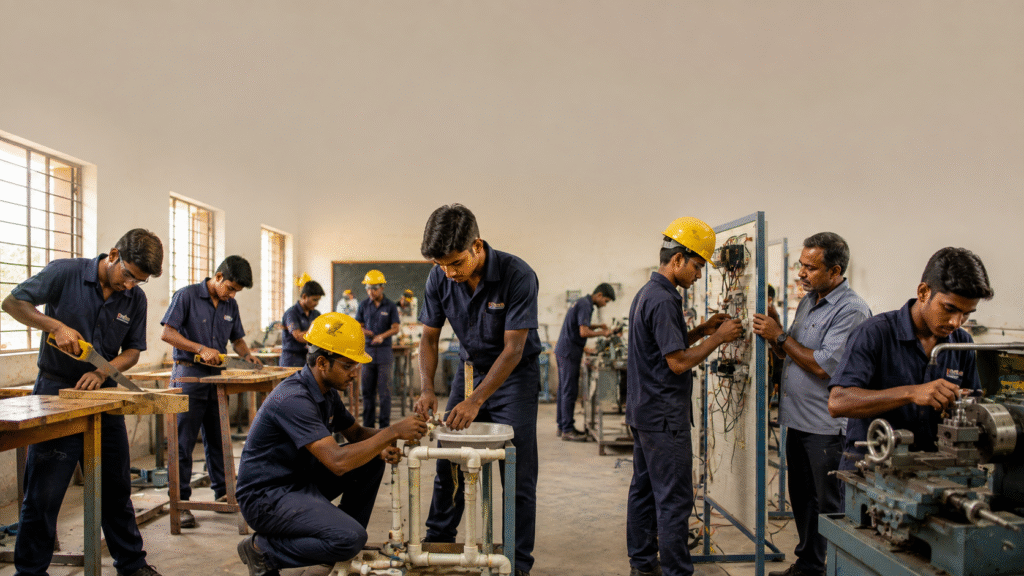
Vocational training initiatives across India typically focus on:
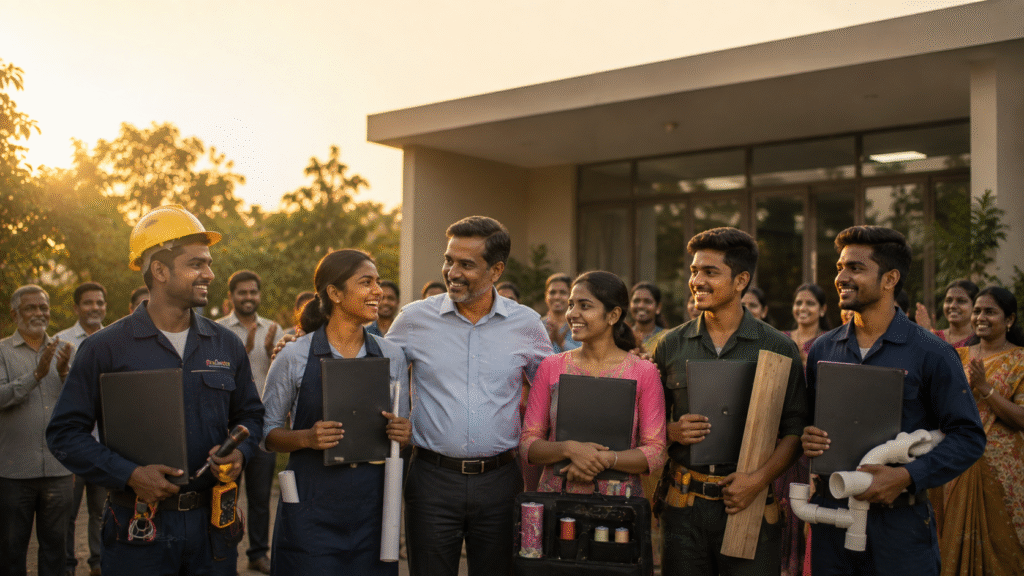
- Trade-specific skills such as tailoring, carpentry, electrical work, plumbing, and welding — skills with immediate, tangible job prospects.
- Retail and hospitality training — preparing candidates for roles in India’s booming service sector, from customer service to housekeeping to food and beverage service.
- Healthcare support roles — training as nursing assistants, home health aides, and lab technicians, sectors with consistently high demand.
- Agri-based skill development — for rural populations, training in modern farming techniques, food processing, and agri-business management that increases income without requiring migration to cities.
- Entrepreneurship training — teaching basic bookkeeping, business planning, and micro-enterprise management so trainees can start their own ventures rather than only seeking employment.
What sets NGO-led vocational training apart from generic skill courses is the wraparound support. Many organizations don’t just train — they also help with job placement, apprenticeships with local businesses, and even seed funding or micro-loans for those who want to start their own small enterprise. This end-to-end approach dramatically increases the real-world impact of the training, turning a certificate into an actual livelihood.
Digital Literacy: Preparing India for a Connected Future
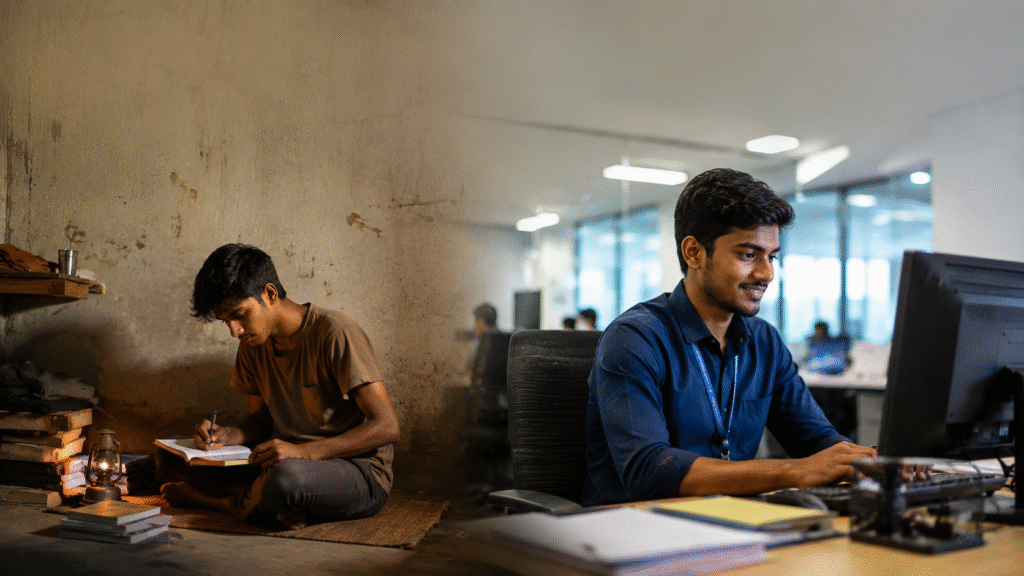
As India’s economy becomes increasingly digital — from UPI payments to online government services to remote work opportunities — digital literacy has become as fundamental as reading and writing. Yet a significant portion of the population, particularly in rural areas and among older adults, remains digitally excluded.
NGOs are addressing this divide through:
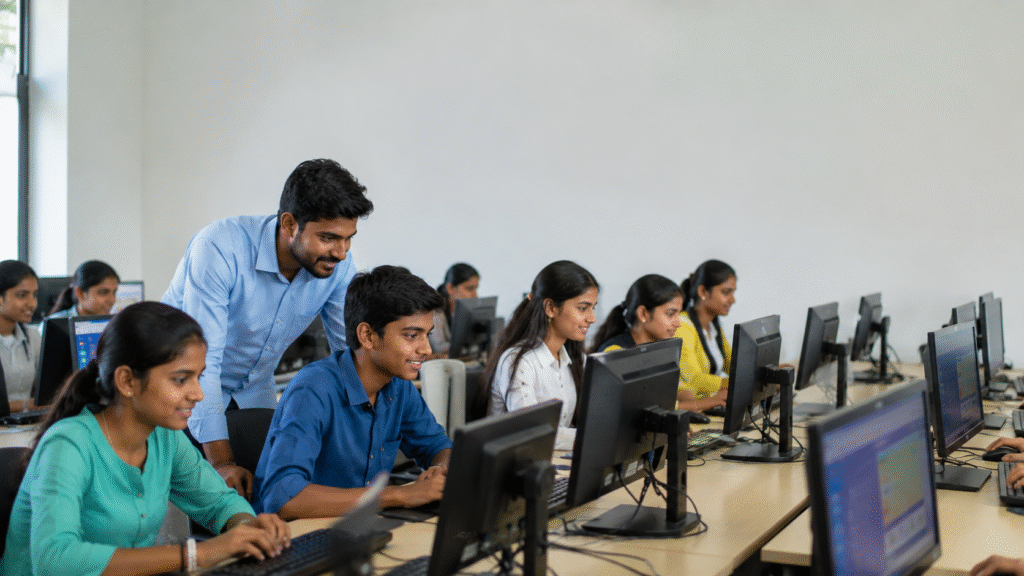
Basic digital literacy programs that teach fundamental skills — operating a smartphone or computer, using email, navigating the internet safely, and understanding online safety and privacy.
Access to government services — Many essential services, from applying for ration cards to accessing healthcare schemes, now require digital literacy. NGOs train beneficiaries to independently access these services rather than relying on middlemen who often charge unofficial fees.
Financial digital literacy — With India’s rapid adoption of digital payments, NGOs teach safe usage of mobile banking, UPI apps, and digital financial tools, which is especially critical in preventing fraud among first-time digital users.
Coding and IT skills for youth — Some organizations run more advanced programs teaching basic coding, computer applications, and IT fundamentals, opening doors to entry-level jobs in India’s growing tech and BPO sectors.
Community digital resource centers — In many villages, NGOs have set up shared computer labs or digital kiosks, since individual device ownership remains low. These centers often become hubs not just for learning but for community problem-solving — from job applications to telemedicine consultations.
Digital literacy training run by NGOs isn’t just about teaching people to use a smartphone. It’s about ensuring that India’s digital transformation doesn’t leave its most vulnerable citizens behind.
Women’s Skill Development: Building Independence and Dignity
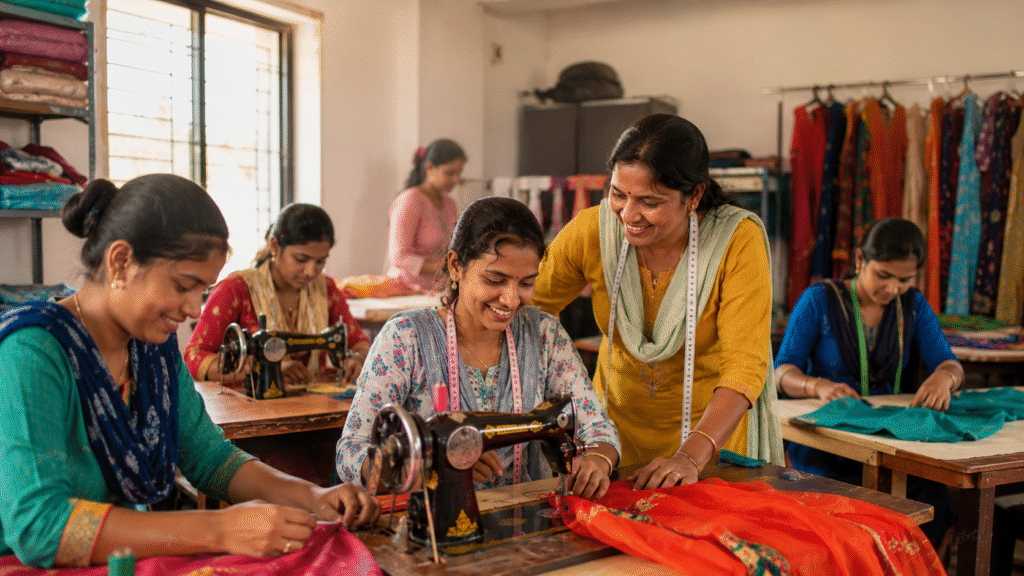
Perhaps nowhere is the transformative power of NGO work more visible than in women’s skill development programs. Across India, gender norms, household responsibilities, and limited mobility have historically kept women out of the workforce and out of classrooms. NGOs working specifically with women and girls are changing that narrative through:
Self-help groups (SHGs) — One of the most successful models in Indian development work, SHGs bring women together to save collectively, access micro-credit, and build small businesses — from tailoring units to food production to handicrafts. This model doesn’t just build skills; it builds solidarity and collective bargaining power.
Tailoring, beauty, and craft-based training — These remain among the most popular and accessible skill programs for women, offering flexible, home-based income opportunities that fit around domestic responsibilities.
Skill training paired with financial literacy — Recognizing that skill alone isn’t enough, many NGOs combine vocational training with lessons in savings, budgeting, and accessing formal banking — empowering women to manage their own income independently.
Legal literacy and rights awareness — Some organizations integrate awareness about legal rights — property rights, protection against domestic violence, and labor rights — into their skill programs, recognizing that economic empowerment and legal awareness go hand in hand.
Leadership and confidence-building — Beyond hard skills, many programs focus on soft skills — public speaking, negotiation, and decision-making — that help women take on leadership roles within their families, self-help groups, and communities.
The ripple effects of women’s skill development programs extend far beyond the individual. Studies and field observations consistently show that when women gain economic independence, household spending shifts toward children’s education and health, breaking cycles of poverty across generations. Educating and skilling a woman doesn’t just change one life — it changes an entire family’s trajectory.
The Models That Make NGO Programs Work
Not all interventions are created equal, and the most successful NGOs in this space tend to share a few common traits:
Community-rooted design — Rather than importing generic curricula, effective NGOs design programs based on local needs, languages, and market demand — understanding, for instance, that a tailoring program only makes sense if there’s local demand for garment work, or a digital literacy program should be paired with actual access to devices.
Partnerships with industry and government — Many NGOs now work closely with local businesses for job placement guarantees and with state skill development missions to align their training with recognized certifications, increasing the credibility and portability of the skills taught.
Data-driven monitoring — Leading organizations track outcomes rigorously — enrollment, retention, learning levels, and post-training employment or income — using this data to continuously refine their programs rather than measuring success by activity alone.
Sustainability through local ownership — The best programs aim to eventually hand over ownership to the community itself, training local teachers, mentors, and para-professionals so that the impact continues even after the NGO’s direct involvement decreases.
Challenges NGOs Continue to Face
Despite their impact, NGOs working in this space face real and persistent challenges:
- Funding uncertainty — Many organizations depend heavily on donor funding, corporate social responsibility (CSR) contributions, and grants, all of which can fluctuate year to year, making long-term planning difficult.
- Reaching the last mile — The communities most in need are often the hardest to reach — remote, conflict-affected, or highly marginalized populations with limited trust in outside organizations.
- Measuring long-term impact — It’s relatively easy to count how many people attended a training session; it’s much harder to track whether that training translated into lasting income improvement or social mobility years later.
- Coordination with government systems — Aligning NGO efforts with government schemes, without duplicating effort or working at cross purposes, requires constant coordination and goodwill on both sides.
- Scaling without losing quality — As successful programs try to expand to new regions, maintaining the same quality of mentorship, community trust, and contextual sensitivity becomes increasingly difficult.
Why This Work Matters More Than Ever
India’s demographic dividend — its large working-age population — is only an asset if that population is educated, skilled, and employable. As automation, AI, and shifting global supply chains reshape the nature of work, the ability to continuously learn and reskill will matter as much as any single credential. NGOs, with their grassroots reach and flexibility, are uniquely positioned to prepare India’s most vulnerable populations for this future — not through top-down mandates, but through patient, community-centered work built on trust.
Charitable trusts working in education aren’t just filling gaps left by the system — they’re often pioneering new approaches that the system later adopts at scale. Many successful government skill development and literacy initiatives have drawn direct inspiration from models first tested and proven by NGOs on the ground.
How You Can Support This Movement
For individuals and businesses looking to contribute to this space, there are several meaningful ways to help:
- Direct donations to established, transparent NGOs working in education and skill development.
- Corporate CSR partnerships that fund specific programs, from digital literacy labs to women’s vocational training centers.
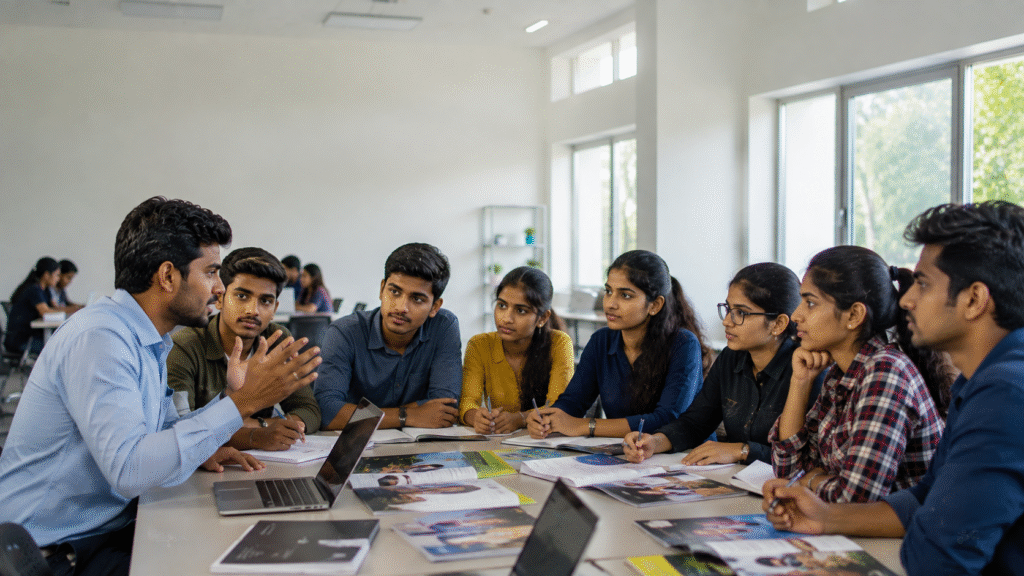
- Volunteering time and expertise — many NGOs need skilled volunteers for mentorship, curriculum design, or specialized training beyond financial contributions.
- Spreading awareness about the work being done, helping connect NGOs with beneficiaries, donors, and partners who might not otherwise know about them.
Conclusion
The story of education and skill development in India cannot be told without acknowledging the quiet, persistent work of NGOs and charitable trusts across the country. From free classrooms in urban slums to vocational training centers in rural villages, from digital literacy kiosks to women’s self-help groups stitching together both garments and independence — these organizations are doing more than delivering programs. They are rebuilding pathways to dignity, opportunity, and self-reliance for millions of people who might otherwise have been left behind.
As India continues its journey toward becoming a global economic powerhouse, the success of that journey will depend not just on GDP growth or infrastructure, but on whether every citizen — regardless of gender, geography, or economic background — has the education and skills to participate in and benefit from that growth. NGOs working tirelessly across the country are proving, every day, that this future is possible.